Explore our cases here and discover how AI is transforming teaching and learning across Europe.
MAI supports teachers by monitoring collaborative learning groups and identifying key “trigger moments”, instances when students need to recognize and regulate their own learning. By doing so, MAI allows teachers to focus on providing deeper, content-specific guidance and helping students develop more advanced learning strategies. It also enhances teachers’ own awareness and skills in fostering self-regulated learning.

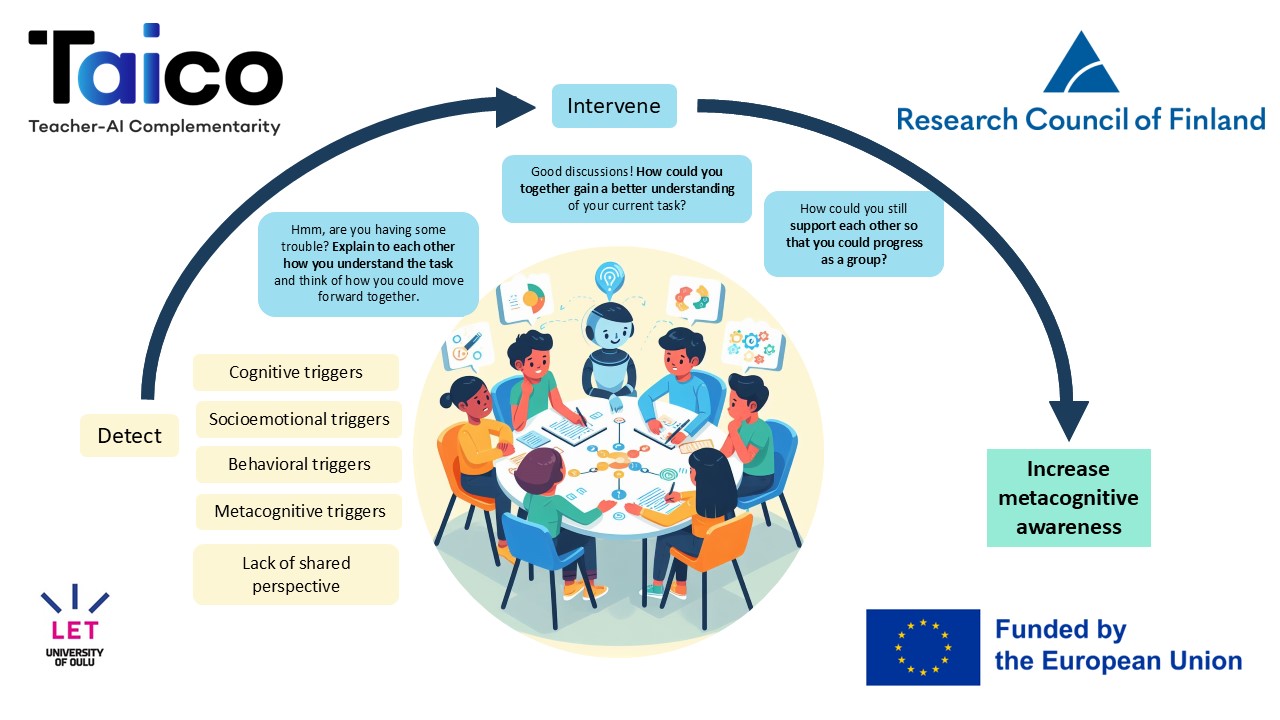
Teachers will gain tools and strategies to design and orchestrate collaborative problem-solving lessons that foster both individual learning progress and productive collaboration. The case aims to strengthen teachers’ situation-specific skills, their ability to notice, interpret, and respond to students’ learning processes with the support of AI-informed feedback.

AI agents act as synergistic partners, monitoring group interactions, identifying challenge moments, and offering theory-grounded intervention suggestions for supporting students’ collaboration and regulation of learning. Teachers engage with AI as co-reasoners and co-creators of feedback, forming an adaptive loop through which both parties evolve in their capacity to support collaborative learning.
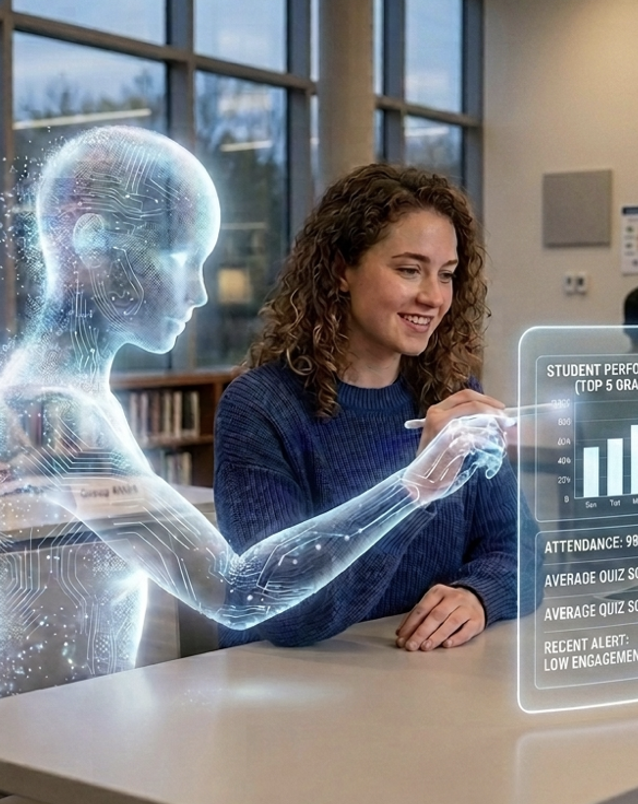
In this case, primary school teachers in the Netherlands plan differentiated mathematics lessons using an AI-supported curriculum adaptivity tool embedded in a widely used commercial Adaptive Learning Technology. Where the underlying system already adapts within learning goals, curriculum adaptivity extends this across learning goals: drawing on student progress data and historical learning patterns, the AI recommends lesson objectives and student groupings across lesson types (instruction, independent practice, review, enrichment), so that pupils progress through the curriculum at different rates. Teachers review the AI's proposals, interrogate the underlying data, and adjust, override, or accept them before finalising the lesson.

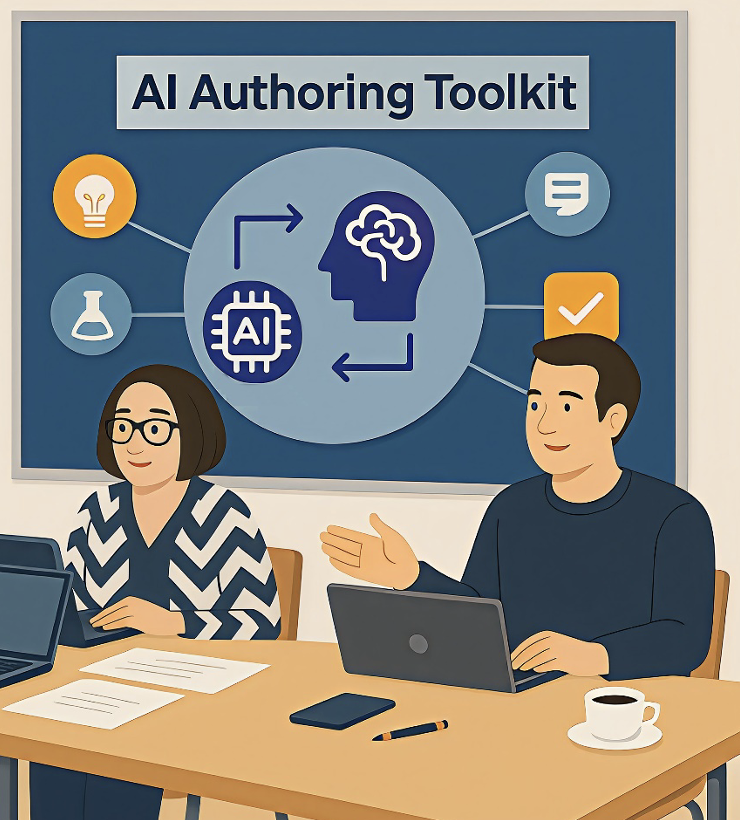
Within this case, teachers co-design with researchers a set of AI-powered tools to support them in designing and authoring learning activities. By incorporating teachers' voices and evidence-informed pedagogical best practices from research into these AI-powered tools, the TAICo case aims to foster effective teacher-AI collaboration. Based on the evaluation of the tools' usage, the case's further objective is to support the development of guidelines for the design and implementation of AI-based tools that assist teachers in conceptualizing and authoring high-quality learning activities.
Teachers face increasing workloads due to large class sizes, teacher shortages, and rising student heterogeneity, particularly in early education. Investigating ways to support their professional practices and needs is essential to enhance instructional quality and promote equitable learning outcomes. An Intelligent Tutoring System (ITS) designed to enhance mathematical competencies in primary and lower secondary education is used to facilitate adaptive supported math training. A teacher-facing dashboard allows teachers to access detailed student information and enables them to monitor learners' progress comprehensively. Having access to in-depth analysis of student learning behavior seems promising as a way of enhancing teachers’ ability to provide targeted and adaptive support.
This case explores the use of Generative Artificial Intelligence (GenAI) to support teachers in the design and delivery of formative feedback. Formative feedback plays a central role in learning, yet it is often challenging to provide in a timely, personalized, and pedagogically meaningful way.


Funded by the European Union. Views and opinions expressed are however those of the author(s) only and do not necessarily reflect those of the European Union or the European Research Executive Agency (REA). Neither the European Union nor the granting authority can be held responsible for them. Project Number: 101177268
University for Continuing Education Krems